Posted
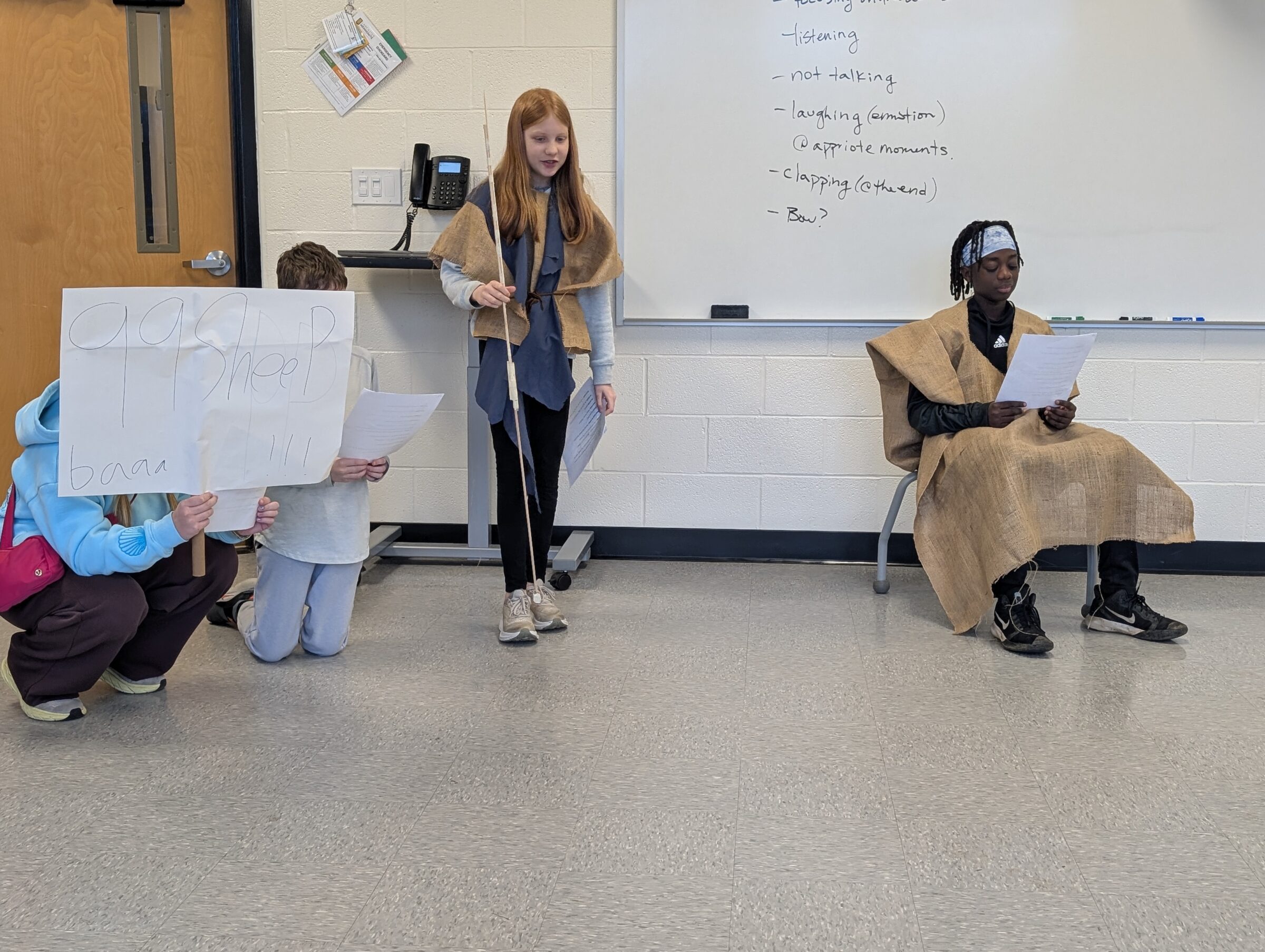
In their 6th grade Bible class, middle school students at Lancaster Mennonite recently stepped into the world of Scripture in a hands-on and meaningful way—by acting out some of Jesus’ most well-known parables.
Drawing directly from the Gospels of Matthew and Luke, students wrote their own scripts and created original plays to bring these stories to life. Sixth graders performed dramatizations of the Parable of the Good Samaritan, the Parable of the Sower (Seeds), the Parable of the Lost Son, the Parable of the Lost Sheep, and the Parable of the Tenants. Through both the creative process and their performances, students explored the stories in depth and reflected on the meaning behind Jesus’ teachings.
As they unpacked the Parable of the Good Samaritan, students focused on what it means to love others. “Jesus was teaching us that everyone is a neighbor, and to love our neighbors,” shared Marcus. Micah S. added, “We learned through this parable that everyone is important.”
In their discussion of the Parable of the Sower, students considered the symbolism within the story. When teacher Mrs. Topf asked, “Who is the sower?” students responded, “Jesus.” When asked about the seeds, they explained that they represent “people who receive the good news in different ways.”
Reflecting on the Parable of the Lost Son, Micah W. shared, “The father represents God welcoming us back to the kingdom,” highlighting the theme of grace and forgiveness.
The Parable of the Lost Sheep prompted thoughtful insights about God’s care for each individual. “Jesus was trying to teach us that you might not realize how important something is until you lose it,” said Nora. Hayley added, “The sheep are representing one of us.” Micah W. expanded on this idea: “If we see the shepherd as God our caretaker, if we go off, He always tries to find us and bring us home.”
Students also explored the cultural context of the story. “The shepherds were outcasts and looked down on because they took care of animals and were often stinky, and people didn’t want to be around them,” explained Ayasha. Simon noted, “Sheep follow each other—not always a good thing.”
Mrs. Topf helped connect these ideas to students’ faith journeys, sharing, “The sheep recognize the voice of the shepherd and know who to follow. We know which way to go by reading Scripture and following Jesus.”
In their study of the Parable of the Tenants, students examined its deeper meaning. Mrs. Topf explained, “This parable is foretelling the story of Jesus’ life and death. As He pushed against the traditional religious leaders of the day, the tenants represented those who rejected Him—such as the Pharisees and others. The servants represented those who tried to teach but were dismissed.” She added that the story ultimately points to Jesus as the cornerstone.
Bringing all the lessons together, Mrs. Topf shared, “In an overarching way, all of these parables are meant to explain who Jesus is, what Jesus did, and what His kingdom is like.”
Through performance, discussion, and reflection, these sixth graders not only learned about Scripture—they experienced it. Rooted in Christ and grounded in Scripture, this kind of learning reflects Lancaster Mennonite’s commitment to helping students grow in faith, understand Scripture deeply, and live out the teachings of Jesus in their everyday lives.